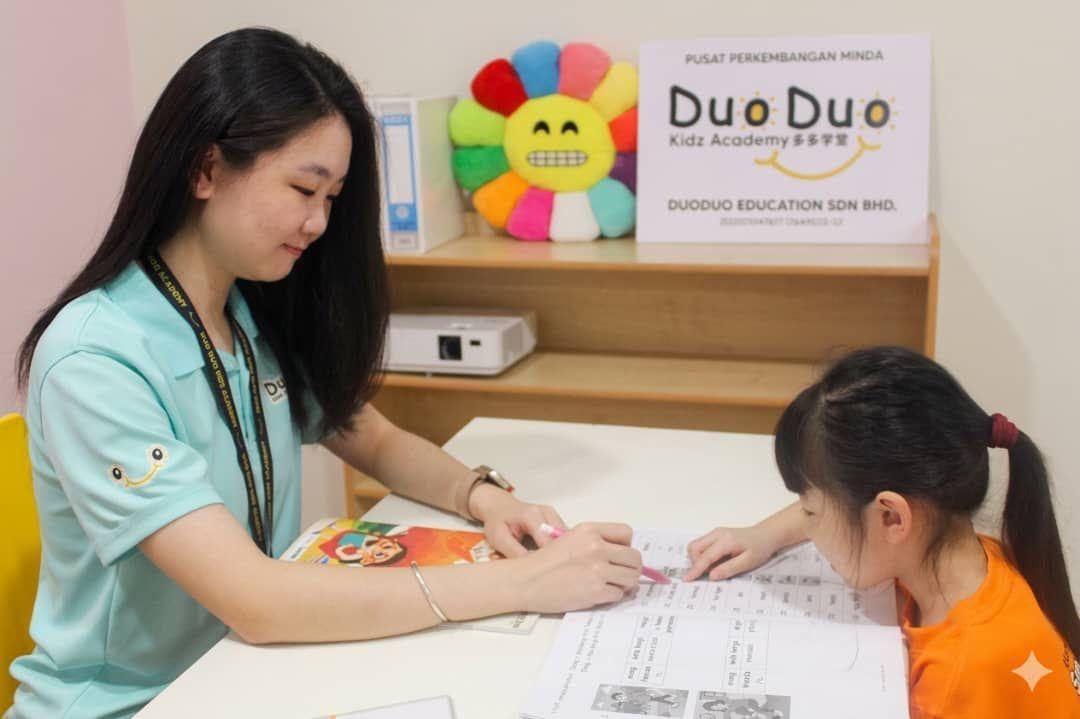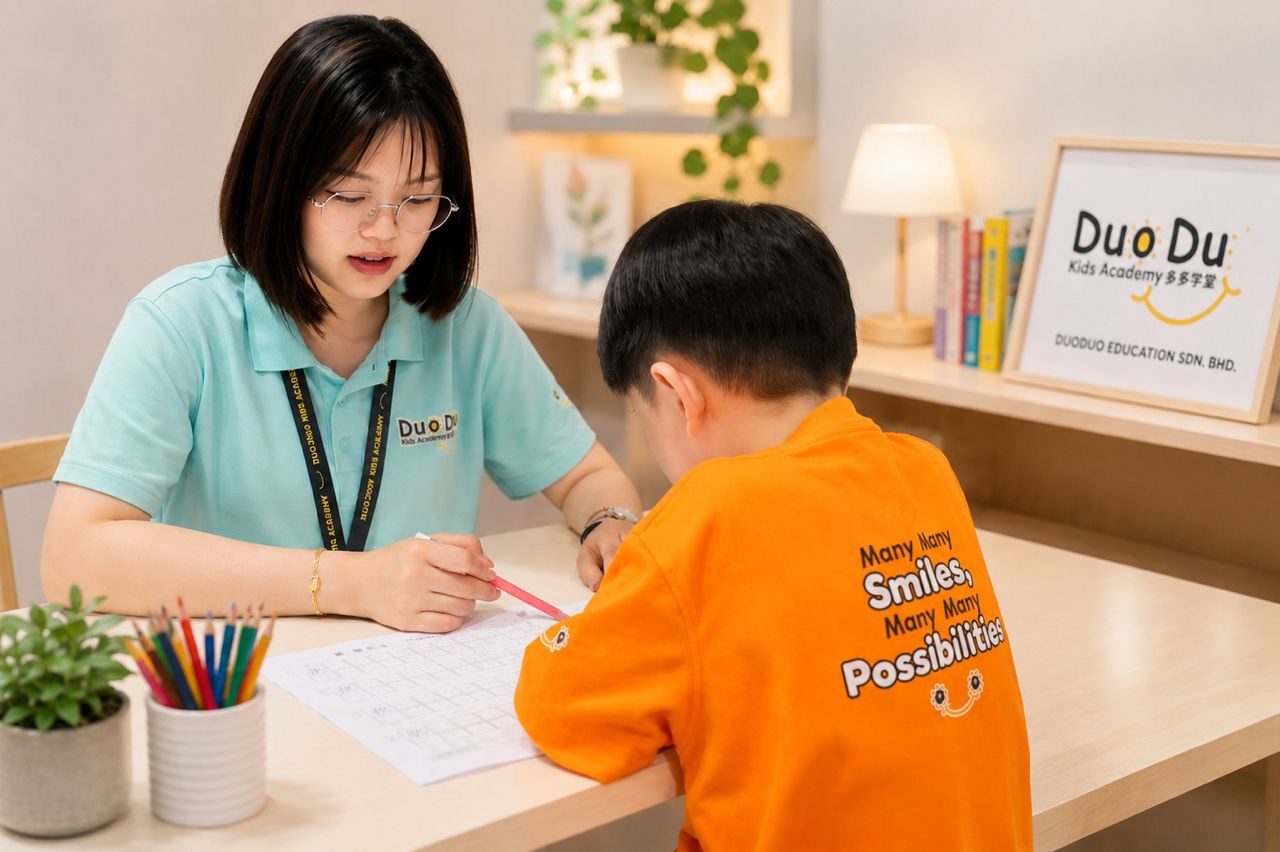
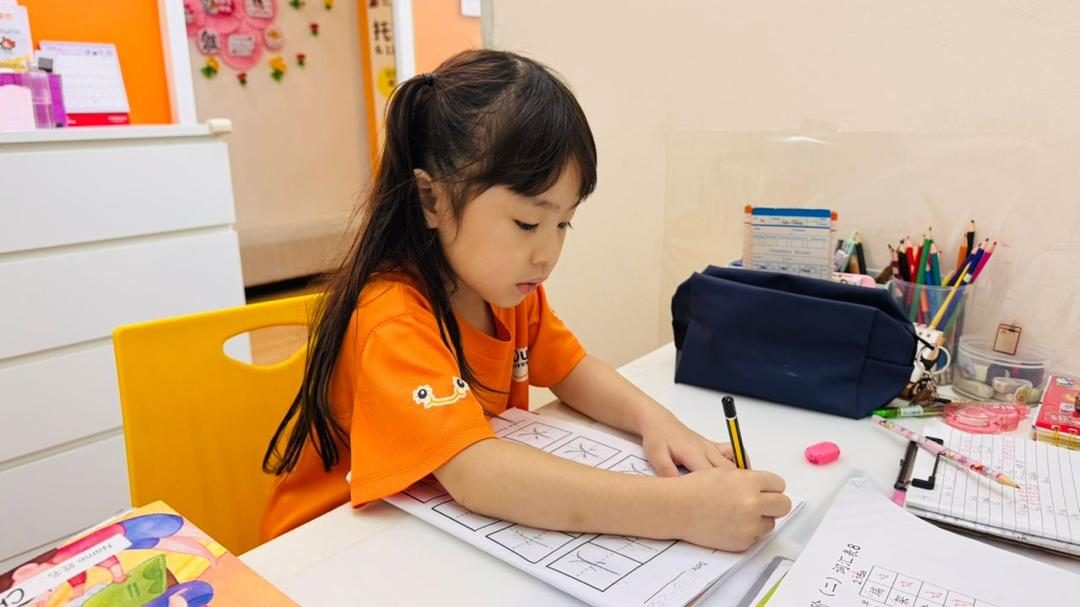
How many Chinese characters should a child know by age 6, 7 and 8?
A practical age-by-age guide to Chinese character recognition targets for Malaysian children, why it matters for Primary 1, and how to check your child's real level.
Read morePractical answers for Malaysian parents on reading, trilingual learning, homework and after-school care.
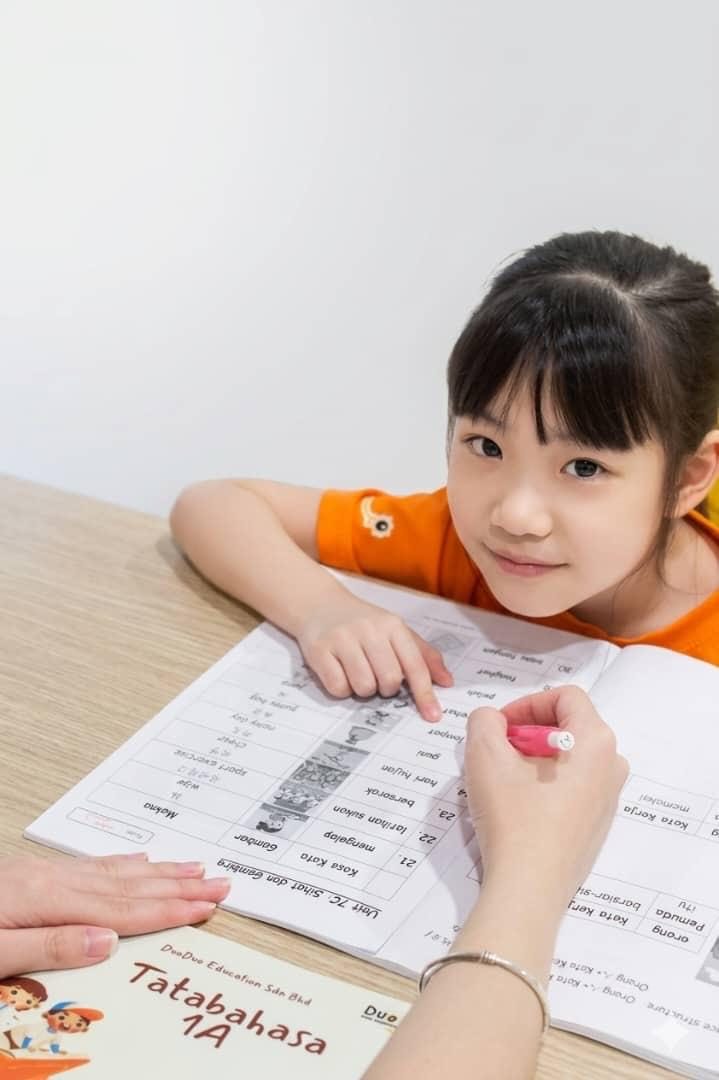
A practical age-by-age guide to Chinese character recognition targets for Malaysian children, why it matters for Primary 1, and how to check your child's real level.
Read more
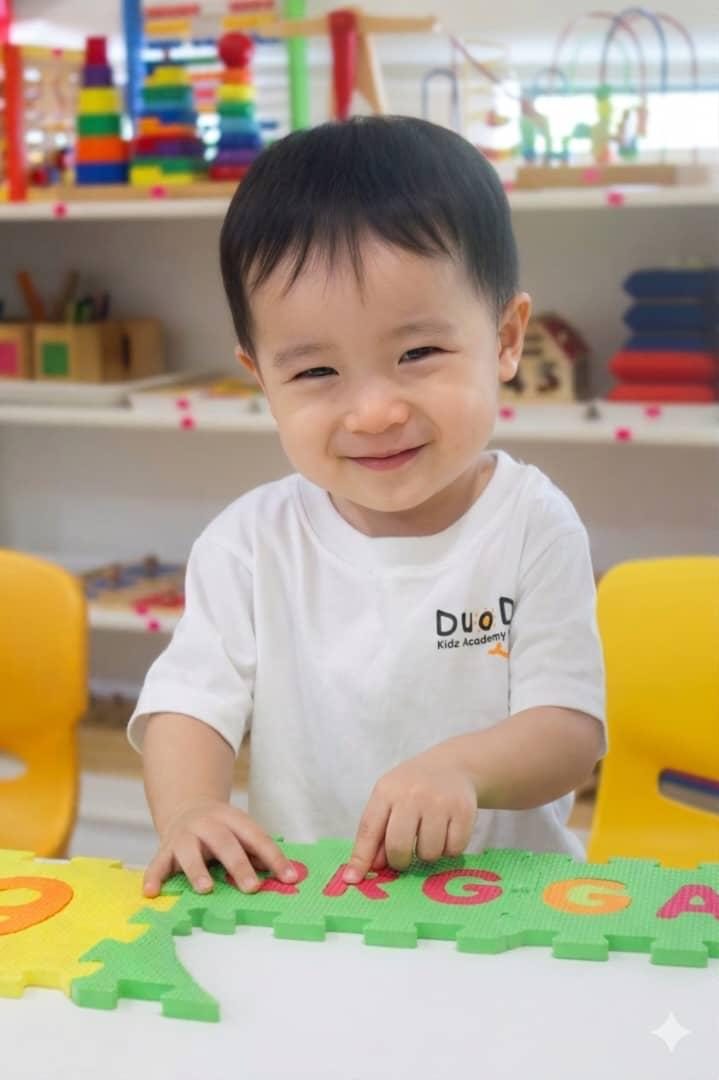
Why memorising Ejaan doesn't work, the suku kata → ejaan → membaca → menulis sequence that does, and how Malaysian Chinese-speaking children catch up in BM.
Read more
The best age to begin phonics, the letter-sound → blending → reading progression, and how older children catch up with 1-to-1 teaching.
Read more
A checklist for working parents comparing 安亲班 / daycare / after-school tuition centres — homework policy, teacher ratio, meals, communication, and the one question most parents forget.
Read more
The teaching philosophy behind DuoDuo: guiding with questions builds independent thinkers, while giving answers builds dependence. What it looks like in a real lesson.
Read more
How to choose between the kindergarten down the road and a preschool programme near you: questions to ask, what to watch, how DuoDuo Kidz Academy compares.
Read more
How parents at DuoDuo Kidz Academy stay informed through same-day updates, a personal progress chart and live word-recognition tests, with no coaching at home.
Read more
A daily routine guide for parents choosing preschool in Malaysia: how much literacy, play, routine and rest a 4-year-old needs, DuoDuo Kidz Academy style.
Read more
The four shifts that turn a child who cries over homework into an independent learner: the right level, questions not answers, early wins, work at the centre.
Read more
Practical steps for parents of a shy child starting tuition or after-school care: what to expect in the first weeks, how to prepare, and how a 1-to-1 setting helps.
Read more
Learning Chinese, Bahasa Malaysia and English at once does not confuse a child when each language is taught separately and at the right level. Common myths, what mixing really means, and how DuoDuo Kidz Academy separates sessions.
Read more
The words parents use shape whether a child keeps trying. Learn simple growth-mindset phrases for Malaysian families, and why DuoDuo Kidz Academy teachers ask questions instead of giving answers.
Read more
Changing tuition centre can feel like a loss to a child. How to explain the change, what to say about the old centre, and how a good new centre helps them settle.
Read more
How English reading tuition should work for Malaysian primary children: letter sounds, phonics, vocabulary, then reading, 1-to-1 at DuoDuo Kidz Academy.
Read more
Why about 1,000 recognised Chinese characters by Primary 1 predicts later success better than any exam mark, and how DuoDuo Kidz Academy builds to it by age 6.
Read more
Short holiday programmes are fun but rarely move a child's reading level. Why year-round, level-based learning works better and when a holiday class helps.
Read more
Moving to a new state or school disrupts young learners. Here is how to keep reading and routines steady, and how DuoDuo Kidz Academy's progress chart carries a child across branches.
Read more
A checklist of questions Malaysian parents should ask before paying any tuition or after-school centre: teacher ratio, level, progress, homework and feedback.
Read more
Why SJK(C) children struggle with Bahasa Malaysia and what BM tuition should do: suku kata, ejaan, vocabulary, membina ayat, 1-to-1 at DuoDuo Kidz Academy.
Read more
If both parents work, evenings should be for dinner and rest, not homework battles. How a good after-school centre gives working families their evenings back.
Read more
If your child can calculate but fails word problems, the issue is reading comprehension. Learn how to spot it and how to fix it in Chinese, BM or English.
Read more
How Malaysian working parents fit school, kokurikulum, Educare after-school care and daily 1-to-1 lessons into one weekday, with a real afternoon example.
Read more
A relaxed but effective school holiday learning plan for Malaysian children aged 4–10: short daily reading, one project, plenty of play, and how DuoDuo Kidz Academy keeps progress going.
Read more
Your child is in an SK school and Mandarin is a third language. How Chinese tuition should work: word recognition first, 1-to-1, the DuoDuo Kidz Academy way.
Read more
Memorised model essays collapse the moment the exam title changes. Learn what Chinese composition actually depends on and the order to build it, from 认字 to 作文.
Read more
Neat, finished homework can hide a child who is copying rather than thinking. The six signs, why it happens in groups, and how a 1-to-1 method stops it.
Read more
The jump from age 6 to Primary 1 (一年级) brings a full school day, three languages and real homework. Learn the routines, literacy targets and habits that make the first year smooth for your child.
Read more
Practical daily strategies to grow your child's English vocabulary in a Chinese-speaking Malaysian home: word groups, reading routines, talk time and games, plus how DuoDuo Kidz Academy builds vocabulary 1-to-1.
Read more
Why 1-to-1 lessons are usually less pressure for a shy child, not more: no audience, no comparison, a teacher who asks rather than tells, early wins built in.
Read more
After-school care or tuition in Semabok, Ujong Pasir, Bukit Baru or Batu Berendam? What Melaka parents should check, and how DuoDuo Kidz Academy Semabok works.
Read more
Since UPSR ended, Malaysian primary schools assess children through PBD under KSSR. Here is what the levels mean, why marks look different and how to support your child.
Read more
Four to six hours of after-school care is healthy for a primary school child if the time has rest, food and learning built in. How to judge hours and quality.
Read more
Understand how Chinese learning moves from 认字 to 词语 to 造句, why sentence building is the bridge to writing, and how to practise 造句 at home without tears.
Read more
A practical checklist for the free 60-minute 1-to-1 trial at DuoDuo Kidz Academy: which language to pick, what to bring, how to prep your child and what's next.
Read more
Working in Bayan Lepas and need after-school care? A guide for Bayan Baru, Sungai Ara and Relau parents, and how DuoDuo Kidz Academy Bayan Lepas fits your hours.
Read more
Secondary school raises the BM and English load sharply. What changes after Standard 6 and how to check language readiness in the final primary year.
Read more
Flat results, vague feedback, a child who dreads going: learn the signs that a tuition or after-school centre is no longer working, and how Malaysian parents can switch without disrupting their child.
Read more
Tadika, kindergarten, preschool, 幼儿园: what the terms mean in Malaysia, how they differ, and the five things that matter more than the label when choosing for a 4–6 year old.
Read more
A calm, practical revision plan for Malaysian primary school exams that fixes foundations first, spreads revision over weeks and avoids the last-minute cram.
Read more
Speaking and reading English are different skills. Learn why a fluent-sounding child may still be unable to read, how to check for the gap, and what to do at home and with DuoDuo Kidz Academy.
Read more
What changes in the first month, three months and year of 1-to-1 lessons at DuoDuo Kidz Academy, and which signs of progress appear long before exam marks do.
Read more
Your child improved for a few months, then stopped. The four reasons tuition results plateau in Malaysian primary school and what a good centre changes.
Read more
A guide for Bukit Mertajam, Alma, Juru and Seberang Perai parents seeking after-school care with real learning, and how DuoDuo Kidz Academy Alma runs Educare.
Read more
A 5-year-old should recognise about 500 words to be on track for Primary 1 in Malaysia. Learn how DuoDuo Kidz Academy sets the 500-word target and how to check your child at home.
Read more
If your child reads aloud well but cannot answer questions, the missing piece is usually vocabulary (词语) or guided questioning. How to find and fix it.
Read more
Children rarely hate learning; they hate failing. Learn how accumulated failure creates avoidance and how an achievement-first approach rebuilds confidence.
Read more
Phonics should come first for Malaysian children learning to read English, with sight words added for the few words that break the rules. Learn why, and how DuoDuo Kidz Academy sequences both.
Read more
Ten minutes of Chinese reading a day builds more than a weekend of tuition. Here is how busy parents can set up a habit that survives homework and screens.
Read more
DuoDuo Kidz Academy teaches 1-to-1 from age 4 to 12. Here is what a lesson looks like at 4, 7 and 11, and why no age in that range is too early or too late.
Read more
What Taiping and Kamunting parents should look for in tuition and after-school care: 1-to-1 lessons, checked homework and daily feedback at DuoDuo Kidz Academy.
Read more
The first term of Primary 1 is the hardest for many families. What changes, the four common problems, and how a good after-school centre absorbs the shock.
Read more
A practical 15-minute bedtime reading routine for Malaysian families juggling Chinese, English and Bahasa Malaysia, built around what DuoDuo Kidz Academy teaches children aged 4–8.
Read more
After-school care in Setapak, Danau Kota and Wangsa Maju for working KL parents: what to check, how Educare differs from daycare, and how DuoDuo Kidz Academy works.
Read more
Your child is in SJK(C) or SK and weak in one language. Which gap to close first, why the school's medium of instruction decides it, and how 1-to-1 helps.
Read more
A calm walkthrough of a child's first day at DuoDuo Kidz Academy: the welcome, the first 1-to-1 lesson, how teachers find the real level, and what parents hear.
Read more
DuoDuo’s free trial is one 60-minute, single-language, 1-to-1 lesson with no payment. Here is how it runs, what the teacher is looking for, and how to understand the level your child is placed at.
Read more
From packing the school bag to starting homework, some children wait for adults to do everything. Here is how to hand responsibility back, step by step, without conflict.
Read more
A step-by-step catch-up plan for a Primary 3 or 4 child who is still weak in Bahasa Malaysia: find the real gap, rebuild suku kata fast, and reconnect with the school syllabus. From DuoDuo Kidz Academy.
Read more
Children forget characters because memorising for 听写 is not the same as recognising them. Learn how spaced repetition and live testing fix it.
Read more
An honest comparison of 1-to-1 and group tuition for Malaysian primary school children: when each works, when it fails, and how to decide based on your child’s level, confidence and goals.
Read more
Three routines that make primary school children independent learners: a five-minute preview, a same-day revision and a self-check before handing in work.
Read more
A practical checklist for parents preparing a child for Primary 1 in a Chinese school: word recognition, BM, English, writing and independence skills.
Read more
From perbendaharaan kata to complete sentences: a parent-friendly guide to membina ayat for SJK(C) children, with sentence patterns, common errors and home activities from DuoDuo Kidz Academy.
Read more
How much screen time is too much for a young reader? Practical rules for balancing devices with books for children aged 4–7, plus how DuoDuo Kidz Academy builds real reading habits.
Read more
Tuition value is not about the cheapest hour. Compare teacher-to-student ratio, teaching method, feedback, level-matching and progress tracking to judge whether a centre in Malaysia is worth it.
Read more
When should a child start recognising Chinese characters? A year-by-year guide for ages 3 to 8 with DuoDuo Kidz Academy's word-recognition targets.
Read more
Practical, tested ways to help a primary school child who cannot focus: staged learning, short tasks, a clean environment and teaching at the right level.
Read more
Options for dual-income families in Malaysia after the school bell: grandparents, helpers, transport, tuition and 安亲班. Compare pick-up logistics, safety and learning value to choose well.
Read more
Stop the Sunday-night memorising cycle. Learn a decoding-based way to prepare for the weekly BM Ejaan test that builds lasting reading skills, based on the DuoDuo Kidz Academy method.
Read more
Comprehension worksheets cannot work until a child recognises most of the words on the page. Learn why 认字 must come before 阅读理解 and how to check readiness.
Read more
Monthly themes help children aged 4–6 learn words, ideas and habits together. Learn why theme-based preschool learning works and how DuoDuo Kidz Academy uses it.
Read more
From sign-in to dismissal, here is how a DuoDuo Educare (安亲成长班) afternoon runs: meal, shower, guided homework, a daily 1-to-1 trilingual lesson, reading and parent feedback. Know what to expect.
Read more
Sitting beside your child for every homework session can create dependence. Learn when to stay, when to step back, and a four-week plan to build independence.
Read more
When a child refuses Chinese homework or cries over 听写, the cause is usually confidence, not laziness. Here is how parents can rebuild motivation calmly.
Read more
A plain-language guide to suku kata terbuka and tertutup, how BM blending works, and simple daily practice ideas parents can use at home. Based on the DuoDuo Kidz Academy BM method.
Read more
Answers copied into homework, no feedback, no routine, large unsupervised groups: learn the warning signs of a poor 安亲班 and what a good after-school centre in Malaysia looks like instead.
Read more
A practical 15-minute daily routine Malaysian parents can use to build Chinese word recognition at home, based on DuoDuo Kidz Academy's staircase 认字 method.
Read more
A clear checklist of what a 4-year-old should learn in preschool in Malaysia: early literacy (about 150 words), daily habits, social skills and how DuoDuo Kidz Academy sets targets.
Read more
If your primary school child spends two or three hours on homework every night, the cause is usually reading or foundations, not laziness. Here is how to fix it.
Read more
安亲班, tuition and daycare are not the same thing. Learn what each one does, who it is for, and how Malaysian parents can choose the right after-school arrangement for their child.
Read more
Why Bahasa Malaysia is hard for SJK(C) children from Chinese-speaking homes, and the step-by-step sequence (suku kata to membina ayat) that DuoDuo Kidz Academy uses to fix it.
Read more
Many children in Malaysia read Chinese textbooks aloud yet cannot recognise the words alone. Here are 7 signs of weak 认字 and what parents can do about it.
Read moreBook a free 60-minute 1-to-1 trial class in a single language subject. You'll see your child's true starting point — and exactly how we'll move forward. No payment, no obligation.
Call us: 011-2828 8676 · hello@duoduo.my