
Last updated: · 5 min read
Should Parents Sit Beside Their Child During Homework?
Sit beside your child only to set up the session and check the finished work, not to supervise every line. A child who needs a parent present for every question has learned to depend on the adult rather than on the question. Use a four-week weaning plan that moves you from beside the table to across the room to a final check, and your child will become a self-starter.
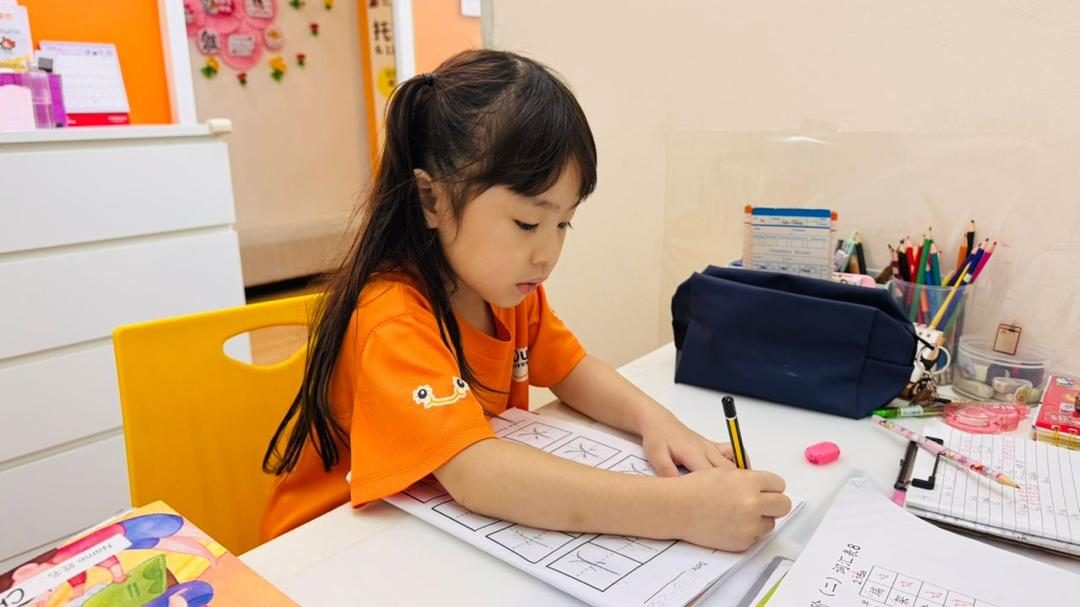
The difference between guidance and dependence
Guidance is when you help your child understand how to attack a problem. Dependence is when your child cannot start a problem unless you are there. Many Malaysian parents slide from the first into the second without noticing, because sitting beside the child gets tonight's homework done faster.
The warning signs are clear. Your child calls “Mummy, how to do?” before reading the question. They wait for your nod after every line. When you leave to answer the phone, work stops. DuoDuo Kidz Academy teachers see this in many new students, and it is fixable.
Why constant presence backfires
When an adult is always available, a child never experiences the small productive struggle that builds thinking. The brain learns that the fastest way to get an answer is to ask, not to think. Over time the child stops reading questions carefully because someone else will explain them anyway.
It also affects confidence. A child who has only ever completed homework with help does not believe they can do it alone, so exam day, when no one is beside them, feels frightening. This is why DuoDuo teachers guide with questions and never give answers directly: the child must do the thinking, every time.
When sitting beside your child is right
There are moments when your presence is exactly what is needed.
- Primary 1 children in the first term, while the routine is new.
- A child who is anxious after a bad result and needs reassurance for a few days.
- The first two or three questions of a new topic, until the pattern is clear.
- The final check, where you look at the finished work together and ask your child to explain one answer.
A four-week weaning plan
Move in stages so that your child does not feel abandoned.
- Week 1: sit beside your child but answer every question with a question: “What does the question ask? What did you try?”
- Week 2: sit at the same table but do your own reading or work. Respond only after your child has attempted the question.
- Week 3: stay in the same room but not at the table. Your child brings you two or three questions at the end, not one at a time.
- Week 4: your child works alone for a set time, then you do a five-minute check together. Praise the effort, not the tick marks.
What to do if your child still cannot start alone
If four weeks later your child still freezes without you, the problem is usually not habit but reading or foundations: they cannot start because they cannot read the question. That needs teaching, not more supervision.
In DuoDuo Kidz Academy's Educare After-School Programme, one teacher works with one child, guides through questions and never gives answers, and each child follows a personal progress chart so that gaps are closed step by step. Parents receive feedback the same day. If you are stuck at the homework table every night, WhatsApp 011-2828 8676 to book a free 60-minute 1-to-1 trial and see how your child works when guided the right way.
FAQ
My child cries when I leave the table. Should I stay?
Stay for the first question, then move a little further each night. Tears usually come from fear of getting it wrong, so praise attempts, not correctness, during the weaning period.
Is it bad to check homework answers before my child submits?
Checking is fine, correcting everything is not. Let some mistakes reach the teacher so they can see the real gaps.
Give your child the most precious gift: the ability to learn on their own.
Book a free 60-minute 1-to-1 trial class in a single language subject. You'll see your child's true starting point — and exactly how we'll move forward. No payment, no obligation.