
Last updated: · 6 min read
From Crying Over Homework to Independent Learner: What Changes
A child cries over homework because the work is above their level and the only help available is an adult who gives answers or gets frustrated. Independence comes from four changes: work pitched at the child's real level, a teacher who guides with questions instead of answers, a run of small successes, and the daily work being handled at the centre rather than at the dinner table. At DuoDuo Kidz Academy this shift is the core of both the 1-to-1 and Educare programmes.
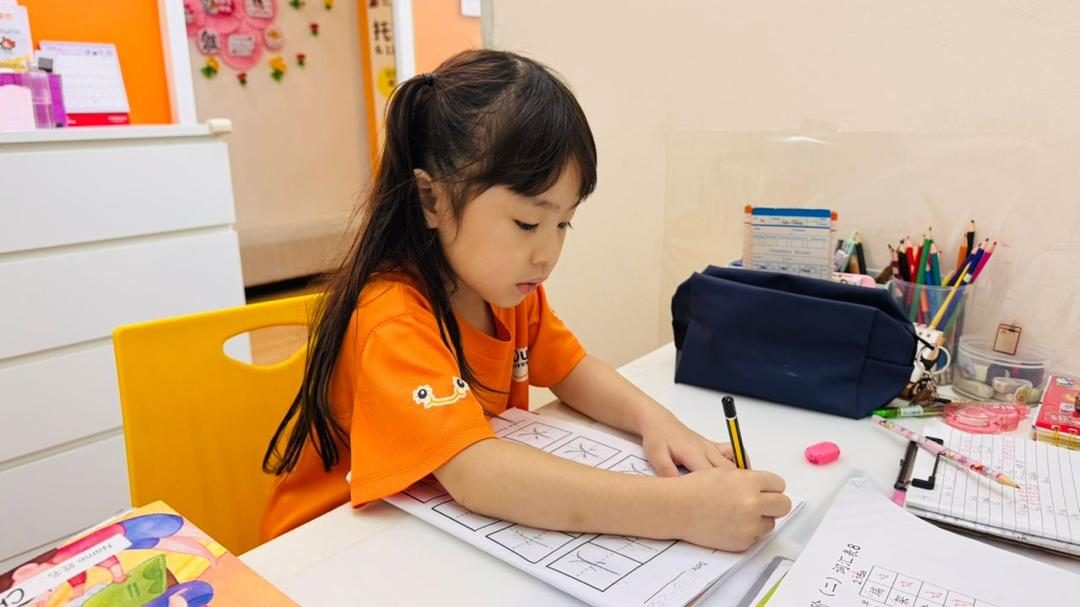
Why the crying happens
Tears over homework are rarely about laziness. They happen when a child is asked to do something they cannot yet do, in front of someone they do not want to disappoint. A Primary 2 worksheet with Primary 3 characters is impossible, not hard, and children know the difference.
The second ingredient is the type of help. A tired parent tends to either give the answer or push harder. Both teach the child that homework is something done to them, not something they can do.
Change one: the work meets the child
The first shift is teaching at the child's level, not the syllabus level. At DuoDuo Kidz Academy every child starts from what they can already do, recorded on a personal progress chart, and moves up the staircase one secure step at a time.
When the work is possible, the crying stops almost immediately. The child is not suddenly braver; the task has become one they can attempt.
Change two: questions instead of answers
DuoDuo teachers guide with questions and never give answers directly. “What does this word start with?” “Which part of the sentence tells you who?” The child does the thinking and keeps the credit.
Over weeks, the questions move inside the child's head. They start asking themselves what the word begins with. That inner voice is what independence actually is.
- Task at the right level
- Question, not answer
- Child completes the step
- Success recorded on the chart
Change three: a run of small wins
Confidence is built from evidence. A child who has completed twenty small tasks without help believes the twenty-first is possible. This is why DuoDuo lessons are pitched to end with something achieved, especially in the first month.
Parents usually notice this change as a change in language: “I cannot” becomes “wait, let me try”. That is the DuoDuo tagline, from “Cannot” to “I Can!”, happening in real time.
Change four: the daily work moves to the centre
The last shift is where the work happens. In the Educare After-School Programme, homework is checked and guided by teachers in the afternoon, and the daily 1-to-1 trilingual lesson closes the gaps that caused the tears. If something is unfinished, the parent is told the same day with the reason.
Evenings become evenings again. Parents do not need to coach at home; the centre carries the teaching and reports back. To see how your child responds to guided 1-to-1 work, book a free 60-minute trial by WhatsApp at 011-2828 8676.
FAQ
How long does it take for a child to stop crying over homework?
Often within the first few weeks once the work is at the right level and the helper stops giving answers. Full independence takes longer, but the tears usually stop first.
Will my child become dependent on the DuoDuo teacher instead?
No. Because teachers never give answers, the child is always the one doing the work. The teacher's role shrinks as the child's skill grows.
Give your child the most precious gift: the ability to learn on their own.
Book a free 60-minute 1-to-1 trial class in a single language subject. You'll see your child's true starting point — and exactly how we'll move forward. No payment, no obligation.