
Last updated: · 7 min read
Exam Revision Plan for Primary School in Malaysia: Foundations, Not Cramming
The best revision plan for Malaysian primary school exams starts four to six weeks out, fixes the foundations the child is still missing, and spreads short daily revision across all subjects instead of cramming the night before. Reading fluency comes first because a child who cannot read the question cannot show what they know. DuoDuo Kidz Academy runs exam revision this way in its Educare programme.
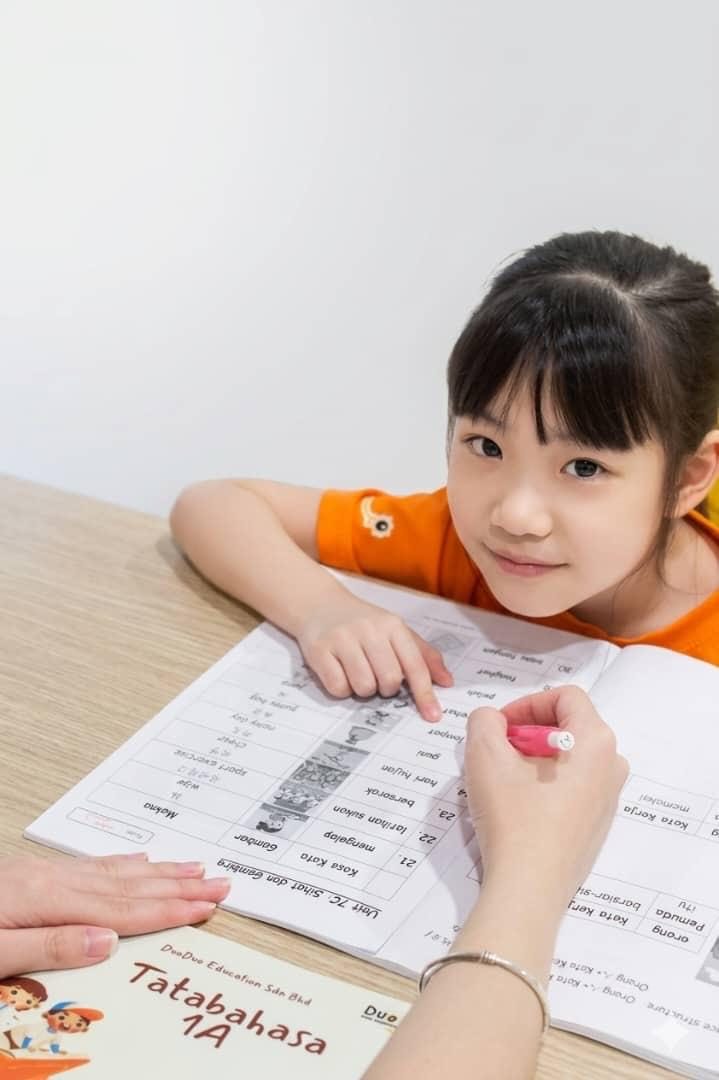
Why cramming fails primary school children
Cramming works, slightly, for adults memorising facts for a single day. It does not work for a nine-year-old who has not yet understood place value or cannot read the karangan question. The night-before session produces a tired child and a frightened child, not a prepared one.
School exams in Malaysia since the end of UPSR are part of school-based assessment, and they test understanding built over the term. The revision plan must therefore fix understanding, which takes weeks, not hours.
Step 1: find the gaps four to six weeks out
Take one past exercise or worksheet from each subject and let your child do it without help. Do not mark it for a score. Mark it for gaps: which questions were skipped, which were guessed, which took very long. Those are your revision list.
Then ask one more question: could the child read every question? For SJK(C) children in particular, DuoDuo Kidz Academy finds that a large share of “maths” or “science” errors are reading errors. If word recognition is weak, revision must start there.
Step 2: fix foundations before practising papers
Practice papers show what a child cannot do; they do not teach it. Spend the first two weeks on the missing foundations from your gap list.
- Chinese: characters and words from this term's texts, then short reading comprehension.
- BM: suku kata and ejaan for weak words, then membina ayat.
- English: phonics for words the child mispronounces, then vocabulary from the textbook.
- Maths: number facts until automatic, then the one or two topics from the gap list.
- Science: key words in the language of instruction, then the concept.
Step 3: spread revision in short daily blocks
From about three weeks out, revise every day for 30 to 45 minutes, rotating subjects so that each is touched at least twice a week. Each block ends with the child explaining one thing they just revised, out loud, in their own words. If they cannot explain it, it is not revised yet.
In the final week, do one timed paper per subject, then spend the next day fixing only the mistakes. Sleep, meals and a short walk matter more than an extra hour on the final night.
Step 4: teach exam habits, not just content
Many marks are lost to habits rather than knowledge. Practise these during the revision weeks so they are automatic on the day.
- Read the whole question before answering, and underline what is asked.
- Answer the easy questions first, then return to hard ones.
- Show working in maths even when the answer seems obvious.
- Check the paper once at the end: skipped questions, units, names on the paper.
How DuoDuo runs exam revision
In the DuoDuo Kidz Academy Educare After-School Programme (安亲成长班), exam revision is built into the afternoon routine in the weeks before school exams, alongside guided homework and the daily 1-to-1 trilingual lesson. Because each child has a personal progress chart, teachers already know the gaps and revise at the child's level rather than re-teaching the whole syllabus.
Parents receive feedback on what was revised and what still needs work. If exam season in your home means stress and late nights, WhatsApp 011-2828 8676 to book a free 60-minute 1-to-1 trial lesson and see where your child's real gaps are before the next exam.
FAQ
How many past-year papers should my child do?
Fewer than you think. One timed paper per subject in the final week, corrected carefully, is worth more than ten papers done without correction.
Should revision cover all three languages?
Yes, but at different depths. Spend most time on the language where reading is weakest, because that weakness affects every other paper written in that language.
Give your child the most precious gift: the ability to learn on their own.
Book a free 60-minute 1-to-1 trial class in a single language subject. You'll see your child's true starting point — and exactly how we'll move forward. No payment, no obligation.