
Last updated: · 5 min read
Screen Time and Early Reading: Finding the Balance for Ages 4–7
Screens are not the enemy of reading, but unplanned screen time replaces the daily minutes a young child needs with books. The balance that works for ages 4 to 7 is simple: reading comes before screens each day, screens are shared rather than solo, and devices stay out of the bedroom. DuoDuo Kidz Academy sees the difference clearly in word-recognition progress between children who read daily and those who mostly watch.
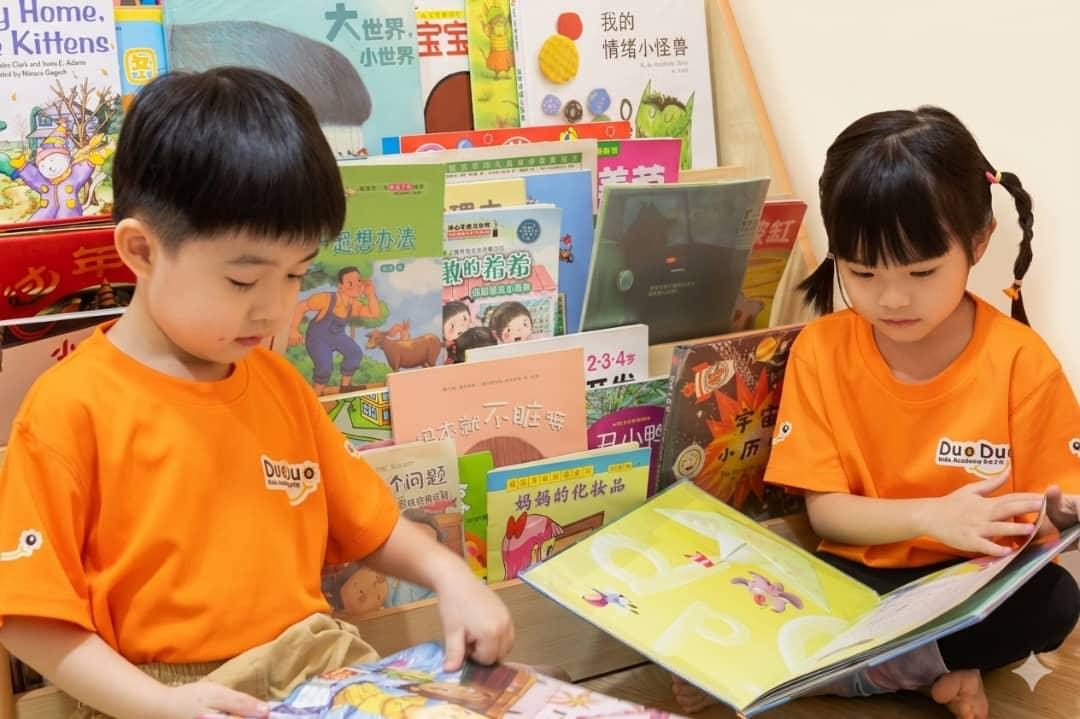
The real problem is displacement, not the screen itself
A child who watches an hour of cartoons is not harmed by the cartoon. The harm is that the hour did not contain a book, a conversation or a game with words. Reading at 4 to 7 grows through repetition, and a screen quietly eats the repetition.
Many dual-income families in Malaysia hand over a phone during dinner prep or a long drive. That is understandable. The goal is not zero screens; it is to make sure reading still gets its turn every day.
Three rules that are easy to keep
Rules that work are rules a tired parent can follow at 8pm. Keep them few and fixed.
- Books before screens: ten minutes of reading or word cards earns the show, not the other way round
- Shared, not solo: sit with your child and talk about what is on the screen, so words are still being exchanged
- No devices in the bedroom: bedtime is for a picture book, in any of your family's languages
Choose screen content that feeds reading
If a screen is on, let it work for you. Slow-paced shows with clear speech in Chinese, English or Bahasa Malaysia give a child new vocabulary to recognise later on paper. Fast, noisy content with little dialogue gives nothing to reuse.
Pause and point. When a character on screen says a word your child is learning, say it together, then look for it in a book that evening. That single link between screen and page is what turns passive watching into recognition.
What DuoDuo teachers notice
DuoDuo Kidz Academy tracks every child on a personal progress chart (个人专属进度表), and teachers see a pattern. Children who read or do word cards daily move up the staircase word-recognition system steadily; children who mainly watch screens know many spoken words but stall when asked to recognise them in print.
The fix is not to take screens away but to add the print. In the 1-to-1 Trilingual Language Programme the teacher guides with questions, never gives answers, and builds from 认字 to 词语 to 造句 so the spoken vocabulary the child already has from screens finally becomes reading.
A one-week reset you can try
For seven days, move screen time to after reading, keep it shared, and log how many minutes of books your child gets. Most families are surprised how little reading was happening and how quickly the child accepts the new order once it is consistent.
If you want an outside check on where your child's reading really stands, WhatsApp DuoDuo Kidz Academy at 011-2828 8676 for a free 60-minute 1-to-1 trial lesson in the language you are most concerned about.
FAQ
Are reading apps as good as books for a 5-year-old?
They can help with letter sounds and simple recognition, but a book with a parent adds conversation, pointing and rereading, which apps rarely do. Use apps as a supplement, not a replacement.
My child cries when the screen is taken away. What now?
Announce the end two minutes early, hand over the next activity (a book, a card game) at the same time, and keep the order identical each day. The protest fades within a week when the routine is predictable.
Give your child the most precious gift: the ability to learn on their own.
Book a free 60-minute 1-to-1 trial class in a single language subject. You'll see your child's true starting point — and exactly how we'll move forward. No payment, no obligation.